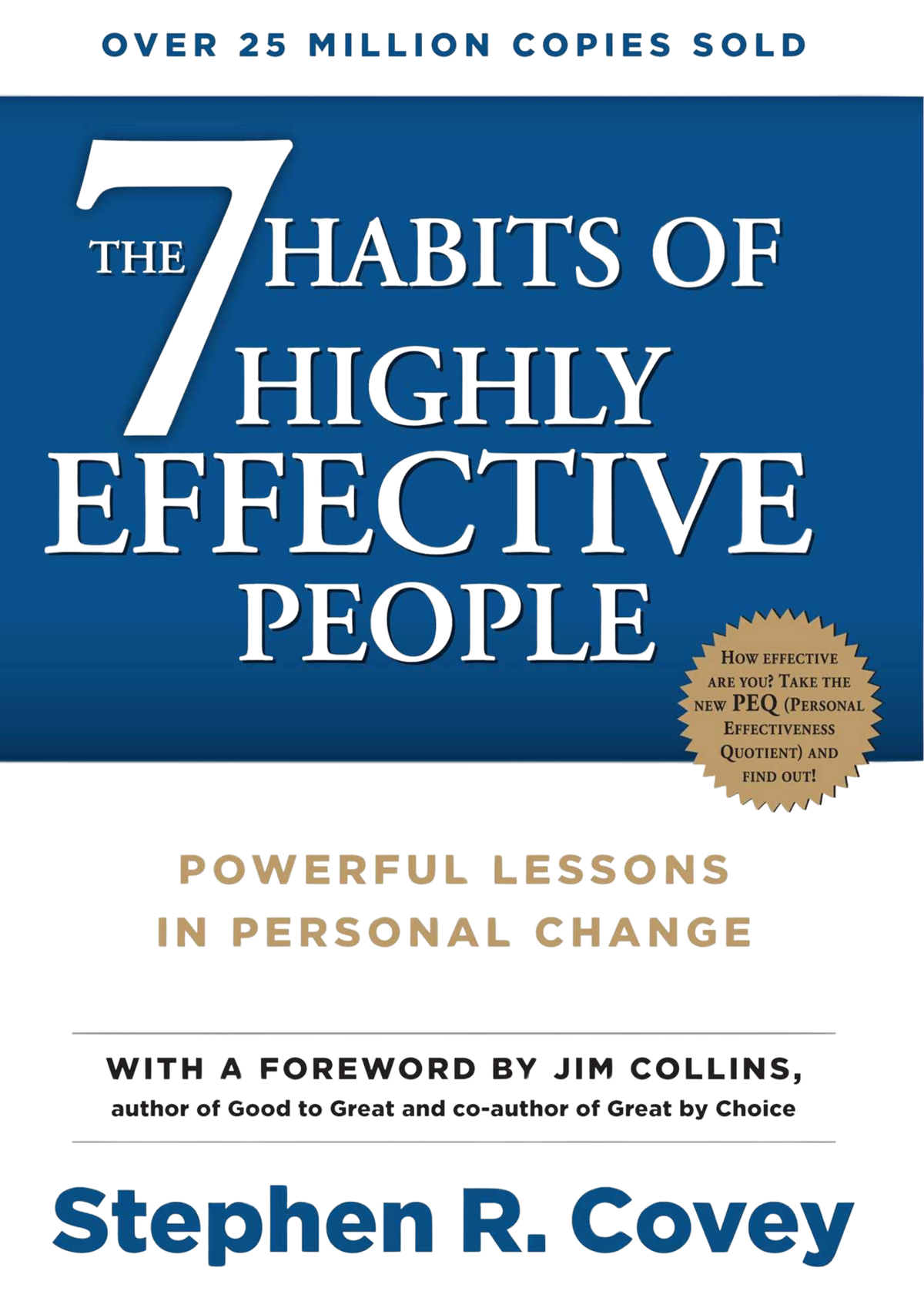
The 7 Habits of Highly Effective People (1989)
The day I was laid off...I am funemployed.
It's not that I am surprised, the overall feeling is more disappointed.
Anyways, I will not stay long victimizing myself as I refuse to let this company take more away from me. Everything happens for a reason. Maybe this is a sign I should focus full time on the business I've been meaning to take off and finally stop finding excuses to work on them seriously.
At this stage, I want to take a moment to reflect and plan what's next:
- Health
- Mind
- daily mindfulness practice and affirmations
- Body
- anti-inflammatory diet
- workout everyday (yoga/pilates/weights/cardio/stretch/walk)
- Spirit
- learn more about crystals, tarot, herbal healing
- Mind
- Income
- Passive
- build that business(es)
- Passive
- Active (everyday)
- find a new job
- Growth
- New skills, knowledge, hobbies
- Travel and experience
MISSION STATEMENT FOR MYSELF
- I deserve a life filled with respect, honesty, and emotional safety.
- I will no longer accept relationships or situations where my feelings are dismissed, my worth undermined or my boundaries are crossed.
- I choose to prioritize my well-being, communicate my needs clearly and stand firm in my values.
- I am committed to cultivating relationships build on mutual respect, trust and openness.
- I will not allow others to make feel small, and I will not sacrifice my peace for someone else's comfort or avoidance.
- I am strong, capable, and deserving of love that lifts me up.
Covey, Stephen R. The Seven Habits of Highly Effective People: Restoring the Character Ethic. New York: Free Press, 1989.
"Reactive people build their emotional lives around the behavior of others, empowering the weaknesses of other people to control them.
Proactive people are driven by value.
No one can hurt you without your consent.
It is our willing permission, our consent to what happens to us, that hurts us far more than what happens to us in the first place.
Things can hurt us physically or economically and can cause sorrow. But our character, our basic identity, does not have to be hurt at all.
My friend, love is a verb. Love - the feeling - is a fruit of love, the verb.
We can be happy and accept those things that are at present we can't control, while we focus our efforts on the things that we can.
Proactive people focus their efforts in the Circle of Influence. They work on things they can do something about. The nature of their energy is positive, enlarging and magnifying, causing their Circle of Influence to increase.
Reactive people, on the other hand, focus their efforts in the Circle of Concern. They focus on the weakness of other people, the problems in the environment, and circumstances over which they have no control. Their focus results in blaming and accusing attitudes, reactive language and increased feelings of victimization.
The Circle of Influence is filled with the be's-
I can be more patient.
I can be wise.
I can be loving.
Anytime we think the problem is "out there," that thought is the problem. We empower what's out there to control us.
The proactive approach is change from the inside-out:
To be different, and by being different, to effect positive change in what's out there - I can be more resourceful, I can be more diligent, I can be more creative, I can be more cooperative.
While we are free to choose our actions, we are not free to choose the consequences of those actions.
For those filled with regret, perhaps the most needful exercise of proactivity is to realize that past mistakes are also out there in the Circle of Concern.
The most proactive approach to a mistake is to acknowledge it instantly, correct and learn from it.
Not to acknowledge a mistake puts a person on a self-deceiving, self-justifying path, often involving rationalization (rational lies) to self and to others...giving it a disproportionate importance, and causes for deeper injury to self.
Look at the weakness of others with compassion, not accusation. It's not what they're not doing or should be doing that's the issue. The issue is your own chosen response to the situation and what you should be doing.
How often do you use and hear reactive phrases such as "if only," "I can't" or "I have to?"
Each part of your life can be examined in the context of the whole of what really matters to you. By keeping that end clearly in mind, you can make certain that whatever you do does not violate the criteria you have defined as supremacy important, and that each day of your life contributes in a meaningful way to have the vision you have for the life.
If we do not develop our own self-awareness and do not become responsible for first creations, we empower other people and circumstances outside of our Circle of Influence to shape much of our lives by default.
We reactively live the scripts handed to us:
These scripts come from people, not principles.
They rise out of our deep vulnerabilities, our deep dependency on others and our needs for acceptance and love, for belonging, for a sense of importance and worth, for a feeling that we matter.
As we recognize the ineffective scripts, the incorrect or incomplete paradigms within us, we can proactively begin to rescript ourselves.
Real success is success with self. It's not in having things, but in having mastery, having victory over self.
Do not fear mistakes - fear only the absence of creative, constructive, and corrective responses to those mistakes.
My money will be my servant, not my master.
My wants will be subject to my needs and my means.
Innocent pleasures in moderation can provide relaxation for the body and mind and can foster family and other relationships. But pleasure, per se, offers no deep, lasting satisfaction or sense of fulfillment.
The pleasure-centered person, too bored with each succeeding level of "fun," constantly cries for more and more. So the next new pleasure has to be bigger and better, more exciting, with a bigger "high."
A person in this state becomes almost entirely narcissistic, interpreting all of life in terms of the pleasure it provides ot the self here and now.
A person continually takes the course of least resistance gradually wastes a life. It ensures that a person's capacities stay dormant, that the mind and spirit become lethargic and that the heart is unfulfilled."